Frozen Shoulder after Forty Causes Treatment
- complete\_care
- May 19, 2026
- Frozen Shoulder
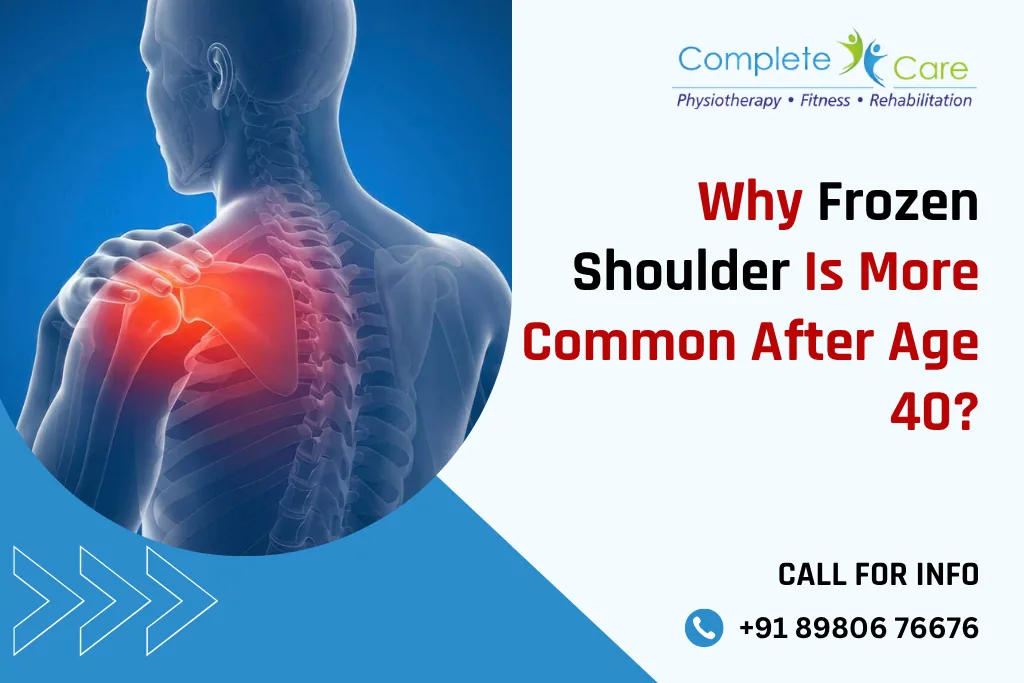
Many people begin noticing shoulder pain and stiffness after crossing the age of 40. What often starts as mild discomfort can gradually become severe enough to affect sleep, work, and daily activities. One of the most common reasons behind this issue is frozen shoulder, also known as adhesive capsulitis.
The condition develops slowly and can significantly limit shoulder movement if ignored. Understanding why frozen shoulder after age 40 becomes more common can help people take early preventive steps and seek proper treatment before the condition worsens.
What Is a Frozen Shoulder?
Frozen shoulder is a condition where the shoulder joint becomes stiff, painful, and difficult to move. The tissues surrounding the shoulder joint become tight and inflamed, restricting movement over time.
Common Symptoms Include
- Shoulder stiffness
- Pain during arm movement
- Difficulty lifting the arm
- Night pain while sleeping
- Reduced range of motion
- Trouble performing daily tasks
Many patients initially ignore these symptoms, assuming they are temporary muscle strain or age related discomfort.
Why Frozen Shoulder Is More Common After Age 40
As the body ages, muscles, joints, and connective tissues naturally lose flexibility and strength. This increases the risk of shoulder-related problems.
1\. Reduced Joint Flexibility
After 40, the shoulder capsule becomes less flexible compared to younger years. Lack of regular stretching or exercise can further reduce mobility.
Result
- Increased stiffness
- Restricted shoulder movement
- Higher risk of inflammation
This is one of the primary reasons why frozen shoulder after age 40 becomes increasingly common.
2\. Sedentary Lifestyle and Desk Jobs
Modern work culture contributes heavily to shoulder problems. Long hours on laptops and mobile phones create poor posture and muscle imbalance.
Common Posture Habits That Trigger Shoulder Problems
- Rounded shoulders
- Forward neck posture
- Lack of movement during work
- Poor sitting ergonomics
Over time, these habits lead to muscle tightness and shoulder stiffness.
3\. Diabetes and Metabolic Conditions
People above 40 are more likely to develop diabetes and other metabolic disorders, which increase the risk of frozen shoulder.
Why It Happens
High blood sugar levels may affect connective tissues around the shoulder joint, causing inflammation and stiffness.
This is why many diabetic patients require specialized shoulder stiffness treatment for long term relief.
4\. Reduced Physical Activity
Many adults become less active after 40 due to work pressure, lifestyle changes, or lack of exercise.
Lack of Activity Can Cause
- Weak shoulder muscles
- Poor circulation
- Joint tightness
- Limited flexibility
Regular movement is essential for maintaining healthy shoulder mobility.
5\. Previous Shoulder Injuries
Minor shoulder injuries that were never treated properly may gradually worsen with age.
Common Examples
- Rotator cuff strain
- Sports injuries
- Shoulder dislocation history
- Repetitive strain from lifting
Without proper recovery, scar tissue and stiffness may develop later.
Stages of Frozen Shoulder
Frozen shoulder usually develops slowly in phases.
Stage 1: Freezing Stage
Symptoms
- Increasing pain
- Difficulty moving shoulder
- Pain at night
This stage may last several months.
Stage 2: Frozen Stage
Symptoms
- Reduced pain intensity
- Severe stiffness
- Restricted arm movement
Daily activities become difficult during this phase.
Stage 3: Thawing Stage
Symptoms
- Gradual improvement in movement
- Reduced stiffness
- Better shoulder flexibility
Recovery can take several months without proper treatment.
How Physiotherapy Helps Frozen Shoulder Recovery?
One of the most effective ways to manage this condition is through physiotherapy for frozen shoulder. Early physiotherapy can improve movement, reduce pain, and prevent long term complications.
Benefits of Physiotherapy
- Improves shoulder mobility
- Reduces inflammation
- Relieves pain naturally
- Strengthens surrounding muscles
- Prevents worsening stiffness
The earlier treatment begins, the better the recovery outcome.
For professional care, explore Frozen Shoulder Physiotherapy Treatment in Ahmedabad to get personalized rehabilitation support.
Common Physiotherapy Techniques Used
Treatment plans are customized based on pain severity and mobility limitations.
Effective Physiotherapy Methods
(1) Stretching Exercises
Gentle stretches improve flexibility and reduce tightness.
(2) Joint Mobilization
Hands-on techniques improve shoulder movement.
(3) Strengthening Exercises
Muscle strengthening supports better shoulder stability.
(4) Heat Therapy
Helps relax muscles and reduce discomfort.
(5) Posture Correction
Correcting posture prevents repeated stress on the shoulder joint.
These methods make physiotherapy for frozen shoulder highly effective for non surgical recovery.
Daily Habits to Prevent Frozen Shoulder
Prevention becomes especially important after age 40.
Healthy Shoulder Care Tips
- Stretch regularly
- Avoid prolonged sitting
- Maintain proper posture
- Stay physically active
- Warm up before exercise
- Avoid repetitive shoulder strain
Small lifestyle changes can significantly reduce the risk of developing frozen shoulder.
Role of Chiropractic Care in Shoulder Health
Along with physiotherapy, chiropractic care may support overall musculoskeletal alignment and posture correction.
Benefits of Chiropractic Care
- Improves joint mobility
- Reduces muscle tension
- Supports posture improvement
- Enhances body balance
For a holistic approach, consider exploring Chiropractic treatment in Gujarat alongside physiotherapy care.
When Should You See a Specialist?
Do not ignore persistent shoulder pain or stiffness.
Seek Medical Attention If
- Pain lasts more than two weeks
- Shoulder movement becomes difficult
- Sleep gets disturbed regularly
- Arm weakness develops
- Daily activities become painful
Early intervention can prevent long recovery periods and improve shoulder function faster.
Conclusion
The risk of frozen shoulder after age 40 increases due to aging tissues, poor posture, reduced activity, and underlying health conditions. While the condition can become frustrating and painful, early care makes a major difference.
With the right shoulder stiffness treatment, lifestyle changes, and professional physiotherapy for frozen shoulder, many people recover successfully without surgery. If you are experiencing ongoing shoulder stiffness or pain, seeking expert guidance early can help restore mobility and improve quality of life.
This article is published for patient education and does not replace an in-person clinical assessment. For personalized diagnosis and treatment planning, contact our physiotherapists on +91 8980 676 676 or visit any of our six centres across Gujarat.