
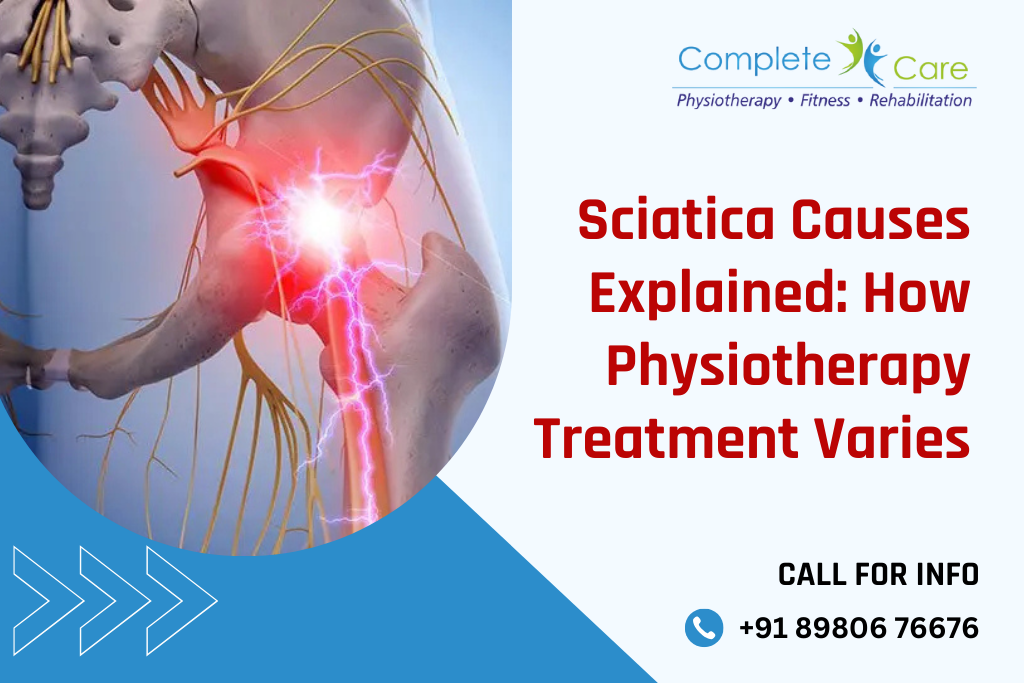
Sciatica is a common condition that affects thousands of people in Ahmedabad, causing pain, numbness, or tingling from the lower back down to the legs. Understanding sciatica causes and symptoms is essential for effective management and choosing the right care.
For patients seeking professional guidance, Complete Care, recognized as the Best Physiotherapy Center in Ahmedabad, offers personalized treatment plans combining exercises, manual therapy, and advanced techniques to relieve pain and restore mobility.
Understanding Sciatica: Causes and Symptoms
Sciatica is not a disease in itself but a symptom of underlying issues affecting the sciatic nerve. The most common sciatica causes and symptoms include:
- Herniated or bulging discs: When spinal discs press on the sciatic nerve, it can cause sharp, shooting pain down one leg.
- Spinal stenosis: Narrowing of the spinal canal can pinch nerves, leading to pain, numbness, or weakness.
- Piriformis syndrome: The piriformis muscle in the buttocks compresses the sciatic nerve, causing discomfort.
- Spondylolisthesis: A vertebra slipping over another can irritate nerves.
- Injury or trauma: Accidents or falls may trigger sciatica by injuring the lower back or pelvis.
Common symptoms of sciatica include:
- Pain radiating from the lower back to the thigh, calf, or foot
- Numbness or tingling in the leg
- Muscle weakness in the leg or foot
- Difficulty standing, walking, or sitting for long periods
Recognizing these symptoms early is key to preventing chronic pain and mobility issues.
How Physiotherapy Treatment for Sciatica Varies?
Not all sciatica cases are the same, and therefore physiotherapy treatment for sciatica must be tailored to the underlying cause and severity. At Complete Care, Best Physiotherapy Center in Ahmedabad, the treatment approach depends on a patient’s specific condition, lifestyle, and pain level.
1. Manual Therapy and Spinal Mobilization
For patients with herniated discs or spinal stiffness, manual therapy helps relieve pressure on the sciatic nerve and restore joint mobility. Gentle manipulation can reduce inflammation and improve blood flow, promoting faster healing.
2. Targeted Exercise Programs
Sciatica pain relief exercises are a cornerstone of physiotherapy. These exercises:
- Strengthen core muscles to support the spine
- Stretch tight hamstrings, glutes, and lower back muscles
- Improve flexibility and posture
- Reduce nerve compression
Examples of effective sciatica exercises include piriformis stretches, knee-to-chest stretches, pelvic tilts, and lumbar stabilization exercises.
3. Posture and Ergonomic Training
Poor posture or prolonged sitting can worsen sciatica. Physiotherapists guide patients on correct posture, workstation adjustments, and safe lifting techniques to prevent recurrence.
4. Electrotherapy and Pain Management
In some cases, physiotherapists at Complete Care use modalities like TENS (Transcutaneous Electrical Nerve Stimulation), heat therapy, or ultrasound to reduce pain and inflammation.
Benefits of Choosing Complete Care in Ahmedabad
Complete Care, recognized as the Best Physiotherapy Center in Ahmedabad, offers:
- Experienced and licensed physiotherapists
- Personalized, evidence-based treatment plans
- Advanced equipment for rehabilitation and pain management
- Integrated care combining exercises, manual therapy, and lifestyle guidance
- Focus on both short-term relief and long-term prevention
With this holistic approach, patients experience reduced pain, improved mobility, and faster recovery.
Preventive Measures for Sciatica
Along with physiotherapy, adopting healthy habits can prevent sciatica flare-ups:
- Maintain a strong core through regular exercise
- Avoid prolonged sitting; take breaks and stretch
- Use ergonomic chairs and supportive footwear
- Lift objects correctly, using your legs, not your back
- Maintain a healthy weight to reduce spinal stress
When to See a Physiotherapist?
You should consult a physiotherapist immediately if you experience:
- Persistent leg or back pain that interferes with daily activities
- Numbness, tingling, or weakness in the leg
- Pain after an injury or accident
- Difficulty walking or standing for long periods
Early intervention with physiotherapy treatment for sciatica can prevent chronic pain and reduce the need for medications or surgery.
Final Thoughts
Sciatica affects many people in Ahmedabad, but understanding sciatica causes and symptoms is the first step toward effective management. Personalized physiotherapy treatment for sciatica, including sciatica pain relief exercises, manual therapy, and posture training, can dramatically improve quality of life.
For professional care, Complete Care, the Best Physiotherapy Center in Ahmedabad, provides expert evaluation, advanced treatment, and long-term support to help patients regain mobility and live pain-free.
Invest in your health today and consult specialists who understand the nuances of sciatica and offer targeted, effective solutions.