Cerebral Palsy Physiotherapy Walking
- complete\_care
- August 12, 2026
- Cerebral Palsy
CP may impact on how a child uses muscles, balances, coordinates and conducts daily activities. These can make walking difficult for some children and for others they might require some assistance to stand up, transfer and/or move safely from one place to another.
Physical therapy will have a significant role in the development and maintenance of functional movement in children. The aim is not just to get the child walking, but to achieve this as safely, efficiently and independently as he is capable based on his abilities.
A physiotherapy program for cerebral palsy may involve gait training, balance exercises, stretching, strengthening, posture exercises and functional exercises. Treatment is flexible and will be modified as the child develops and their skills evolve.
This guide outlines the role physiotherapy can play in helping children with cerebral palsy to walk and move and outlines what parents can expect from a rehabilitation program.
What Is Cerebral Palsy and How Can It Affect Walking?
Cerebral palsy is a neurological condition that can affect movement and posture. Its effects vary considerably from one child to another.
A child may experience:
- Muscle stiffness or spasticity
- Muscle weakness
- Poor balance
- Difficulty coordinating movements
- Abnormal walking patterns
- Limited joint movement
- Difficulty maintaining posture
- Delayed motor skills
Some children may walk independently but have difficulty with stairs or uneven surfaces. Others may require walking aids, orthoses, or additional support.
Therefore, rehabilitation should be based on the child’s actual functional abilities and goals, rather than applying the same exercise program to every child.
Why Early Physiotherapy Can Be Helpful
Early rehabilitation gives children opportunities to practice functional movements while their skills are developing.
The purpose of early cerebral palsy physiotherapy treatment is not to promise a particular walking outcome. Instead, it focuses on helping the child develop useful movement strategies, maintain flexibility, build appropriate strength, and participate in daily activities.
Early physiotherapy may help address:
- Delayed motor development
- Difficulty with sitting or standing
- Limited balance
- Abnormal movement patterns
- Muscle tightness
- Difficulty transitioning between positions
Parents should discuss the appropriate timing and intensity of therapy with their child’s healthcare team.
How Physiotherapy Supports Walking in Cerebral Palsy
Walking involves much more than moving the legs. A child needs sufficient balance, trunk control, muscle coordination, joint mobility, and the ability to shift weight from one leg to another.
Physiotherapy addresses these components individually and then combines them into functional movement.
#### 1\. Gait Training
Gait training focuses on helping a child practice walking in a controlled environment.
A physiotherapist may observe:
- Step length
- Foot placement
- Weight transfer
- Knee and hip movement
- Trunk position
- Walking speed
- Stability during turns
The therapist can then select exercises and activities that address the child’s specific walking difficulties.
The objective is to make walking more controlled and functional rather than simply increasing walking speed.
#### 2\. Balance Training
Balance is essential for safe walking.
A child may practice maintaining stability while:
- Sitting
- Standing
- Reaching
- Changing direction
- Stepping over small obstacles
- Moving from one position to another
Improving balance can help children feel more confident when performing everyday movements.
#### 3\. Strength and Motor Control
Muscle weakness can make standing and walking more demanding.
Age-appropriate strengthening activities can target muscles involved in:
- Hip control
- Knee stability
- Ankle movement
- Trunk control
- Postural stability
However, strengthening should be carefully selected. A rehabilitation program should consider the child’s neurological condition, fatigue, movement pattern, and overall tolerance.
#### 4\. Flexibility and Stretching
Muscle tightness can restrict joint movement and interfere with functional positioning.
A physiotherapist may use gentle stretching and positioning strategies to help maintain available movement.
Areas commonly assessed include:
- Hips
- Knees
- Ankles
- Hamstrings
- Calf muscles
Maintaining flexibility can make positioning and movement easier for some children.
Cerebral Palsy Exercises for Children
There is no single list of cerebral palsy exercises for children that is appropriate for everyone.
Exercises should be selected after assessing the child’s movement, strength, balance, coordination, and functional goals.
Depending on the child’s abilities, therapy may involve:
#### (1) Sitting Activities
Children may practice maintaining an upright sitting position, reaching for objects, or transferring weight from one side to another.
#### (2) Standing Activities
Supported standing can help children practice weight bearing, posture, and balance.
#### (3) Step Practice
Step-ups or controlled stepping activities may be introduced when appropriate to improve leg control and functional mobility.
#### (4) Reaching and Weight-Shifting
Reaching while standing can encourage controlled weight transfer and postural adjustments.
#### (5) Walking Activities
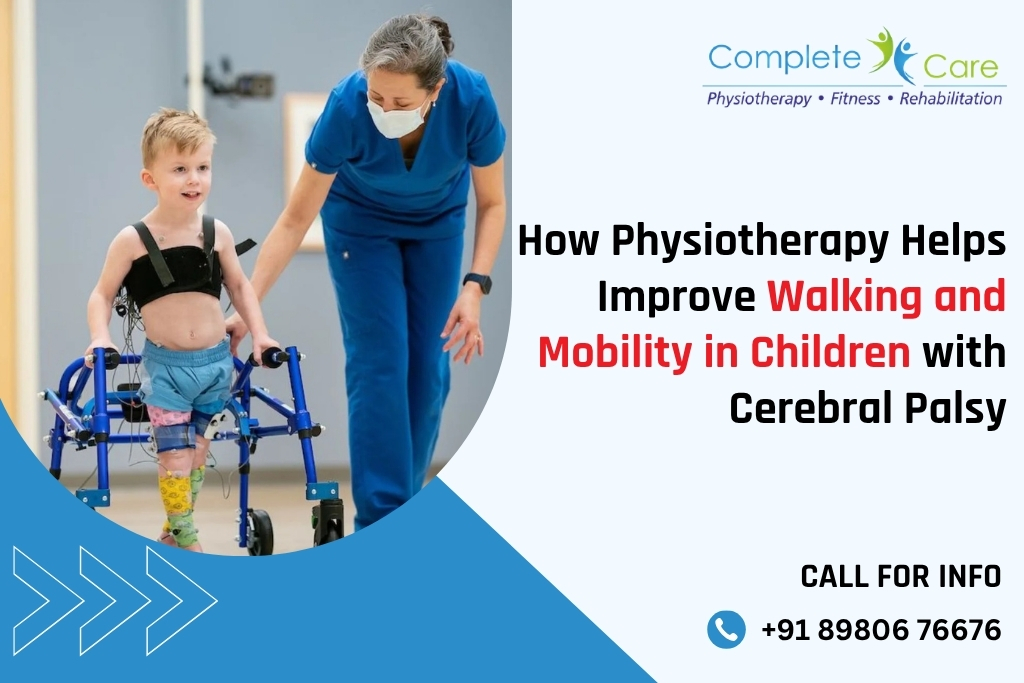
Walking practice may involve parallel bars, therapist assistance, walking aids, or other appropriate support.
The key is quality and purpose of movement, rather than performing a large number of repetitions without supervision.
How Physiotherapy Can Improve Everyday Mobility
Walking is only one part of mobility.
A child’s independence can also depend on their ability to move between different positions and environments.
Physiotherapy may therefore include functional activities such as:
- Getting up from a chair
- Sitting down safely
- Moving from the floor to standing
- Turning around
- Climbing stairs
- Getting in and out of bed
- Walking on different surfaces
- Reaching for objects
- Participating in age-appropriate play
These activities make rehabilitation more meaningful because they connect therapy with the child’s everyday life.
Can Physiotherapy Change a Child’s Walking Pattern?
Physiotherapy may help improve certain aspects of movement and walking, but results vary significantly between children.
Factors that influence rehabilitation include:
- Type and severity of cerebral palsy
- Muscle tone
- Existing walking ability
- Balance and coordination
- Joint mobility
- Age and development
- Consistency of therapy
- Use of mobility aids or orthoses
The goal should therefore be realistic and individualized.
For one child, success may mean walking independently. For another, it may mean walking farther with an assistive device. For someone with greater mobility limitations, improved transfers or supported standing may be a more meaningful goal.
The Importance of a Personalized Rehabilitation Plan
A child’s needs can change as they grow.
An exercise that is appropriate at one stage may need to be modified later. Growth spurts, changes in muscle tone, new functional goals, and changes in mobility can all influence the treatment plan.
A personalized cerebral palsy rehabilitation program may combine:
- Gait training
- Balance exercises
- Strengthening
- Stretching
- Postural training
- Functional movement practice
- Parent or caregiver education
Complete Care‘s cerebral palsy service describes an approach involving neurodevelopmental therapy, strength training, functional exercises, posture correction, and gait training to support motor function, mobility, and independence.
How Parents Can Support Physiotherapy at Home
Parents play an important role in maintaining consistency between therapy sessions.
Instead of turning every home activity into a formal exercise session, families can incorporate movement into normal routines.
For example:
- Encourage safe active play
- Practice recommended movements during daily activities
- Give the child time to complete tasks independently
- Follow the therapist’s home-exercise instructions
- Avoid forcing movements that cause pain or distress
- Keep the environment safe and accessible
For families who have difficulty traveling regularly, home based physiotherapy may also be an option. Complete Care provides home physiotherapy services for neurological and pediatric conditions, including cerebral palsy.
When Should Parents Consider Physiotherapy?
Parents may benefit from a professional assessment if a child has difficulty with:
- Sitting independently
- Standing
- Walking
- Maintaining balance
- Climbing stairs
- Moving between positions
- Keeping up with age-appropriate physical activities
- Managing muscle stiffness
An assessment does not mean that a child will necessarily require intensive therapy. It helps identify functional challenges and determine whether physiotherapy could be beneficial.
Looking for Cerebral Palsy Treatment in Ahmedabad?
Families searching for cerebral palsy treatment in Ahmedabad can consider a multidisciplinary approach that focuses on the child’s individual mobility and developmental needs.
Complete Care provides specialized neurological physiotherapy services for cerebral palsy, including gait and functional rehabilitation.
Conclusion
Cerebral palsy can make walking and mobility challenging, but rehabilitation can help children work toward meaningful functional goals. Physiotherapy for cerebral palsy focuses on more than walking alone-it can address balance, posture, flexibility, strength, coordination, and everyday movement.
Through individualized cerebral palsy physiotherapy treatment, children can practice functional skills in a structured and supportive environment. Cerebral palsy rehabilitation may include gait training, balance work, stretching, strengthening, and carefully selected cerebral palsy exercises for children.
Most importantly, every child’s progress is different. The right goals are the ones that match the child’s abilities, needs, and daily life. For families seeking cerebral palsy treatment in Ahmedabad, a professional assessment can help determine which rehabilitation strategies are appropriate for the child.
This article is published for patient education and does not replace an in-person clinical assessment. For personalized diagnosis and treatment planning, contact our physiotherapists on +91 8980 676 676 or visit any of our six centres across Gujarat.