Can Recovery Continue Years After a Spinal Cord Injury? Activity-Based Rehab Explained
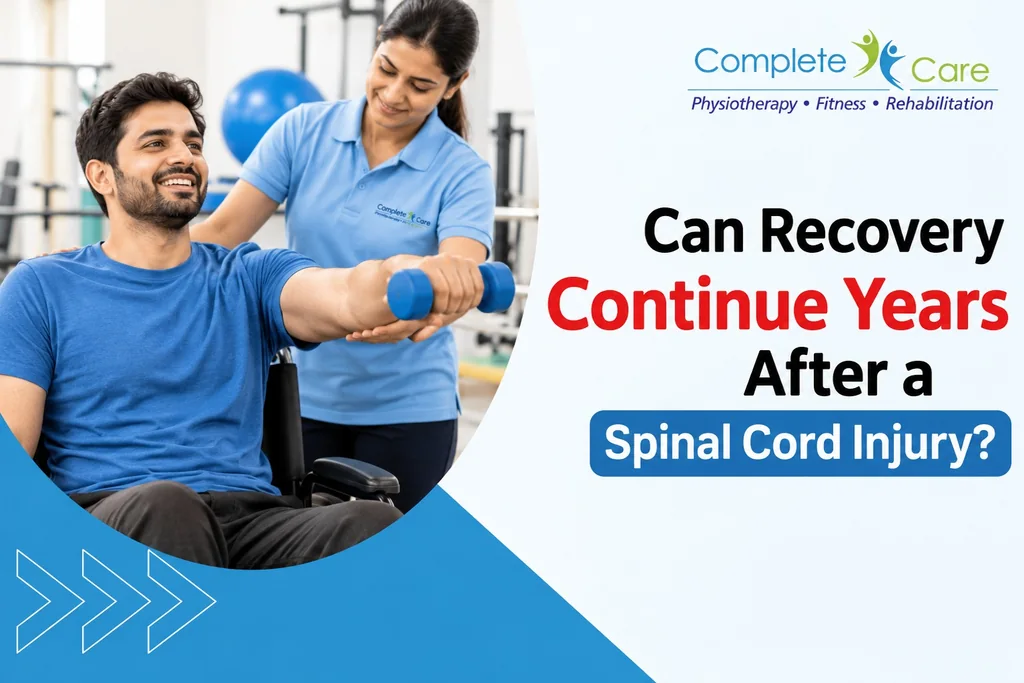
Many families are told that most recovery after a spinal cord injury (SCI) happens in the first 6 to 12 months. That is broadly true, but it is often heard as "after one year, nothing more can change". That is not the full picture. Research in 2025 and 2026 is showing that the nervous system can keep responding to intensive, task-focused training long after the injury.
Medically reviewed by [Dr. Hardik Patel (PT)](/best-physiotherapist-in-ahmedabad) | Updated October 2026 | 9 min read
MEDICAL DISCLAIMER
Why "Recovery Stops After One Year" Is Only Half True
After an injury, the spinal cord does not regrow in the way skin heals. But the connections that survive, especially in incomplete injuries, can be strengthened with repeated, meaningful practice. This is called neuroplasticity.
The topic is trending because of new evidence. A 60-person international trial published in *Nature Medicine* studied people whose injuries were at least one year old. After two months of intensive rehab alone, gains in arm and hand function tended to plateau. When non-invasive spinal cord stimulation was added to the training, many participants kept improving. The device used, ARC-EX, received FDA authorisation in late 2024 for clinic use in the USA.
What this means for patients in India:
- The stimulation was always paired with hard, structured exercise. Training remained the core of the programme.
- Gains varied from person to person and were not a cure.
- A long gap in rehab does not mean the door is closed. A fresh assessment is worth it.
Know Your Injury: The ASIA Scale
Every good rehab plan starts with the ASIA Impairment Scale. It describes how much movement and sensation remain below the injury level. At Complete Care, this is part of the first spinal cord injury rehabilitation assessment.
ASIA Impairment Scale and Rehab Focus
What each grade means for day-to-day training
Grade A — complete
No movement or sensation in the lowest sacral segments. Rehab targets independence: transfers, wheelchair skills, and skin and bladder care routines.
Grade B — sensory incomplete
Some sensation below the injury but no movement. Focus on protecting skin, building upper-body strength and watching for signs of recovering movement.
Grade C — motor incomplete
Some movement below the injury, with most key muscles weaker than grade 3. Focus on activating weak muscles, supported standing and early gait work.
Grade D — motor incomplete
Movement below the injury with at least half the key muscles at grade 3 or above. Focus on walking training, balance, endurance and community mobility.
Grade E — normal
Normal movement and sensation. Focus shifts to general fitness and preventing secondary problems.
What the grade does not decide
People with complete injuries also gain a great deal from rehab. Better transfers, stronger arms and a good wheelchair routine change daily life.
Incomplete injuries (B, C and D) usually have more room for change. If the injury is recent, our guide on early physiotherapy after spinal cord injury covers the first months, and you can also read about new trends in SCI physiotherapy.
What Activity-Based Therapy Looks Like
Older rehab models focused mainly on teaching compensation, such as using the arms to replace the legs. Activity-based therapy also tries to wake up what lies below the injury through repeated, weight-bearing, task-specific practice.
At Complete Care, sessions run 60 to 75 minutes, one-on-one, and combine:
- [Functional Electrical Stimulation (FES)](/best-electrical-stimulation-therapy-in-ahmedabad): small currents help weak or paralysed muscles contract during cycling, grasping or standing tasks.
- Tilt-table and supported standing: loads the bones and helps manage spasticity and blood pressure.
- Body-weight-supported gait training: a harness takes part of the weight so the legs can practise stepping patterns.
- Bobath / NDT neuro-facilitation: hands-on guidance to improve trunk control and movement quality.
- Transfer and wheelchair skills: slide-board transfers, car transfers, ramps and pressure-relief push-ups.
- Caregiver training: safe two-person transfers, turning schedules and daily skin checks.
Progress is tracked with tools such as the Modified Ashworth Scale for tone and the Spinal Cord Independence Measure (SCIM). For inpatient-level intensity, see our neuro and spine rehabilitation centre.
Do's and Don'ts for Life After Spinal Cord Injury
Daily Habits That Protect Progress
Relieve pressure every 2 hours
Change position in bed, and more often in the wheelchair. Do not sit in one position for hours, even on a good cushion.
Check your skin every day
Inspect the hips, tailbone and heels. Never ignore a red patch that does not fade within 30 minutes.
Keep up the home plan
Continue your exercises between sessions rather than stopping once you are discharged from hospital.
Stretch tight muscles daily
Manage spasticity with slow, steady stretches. Do not force a stiff joint with sudden, jerky movements.
Ask for a fresh assessment
If progress has stalled, get re-assessed rather than assuming nothing more can change after the first year.
Know the red flags
Learn the warning signs of autonomic dysreflexia. Avoid unproven "stem cell" or miracle-cure offers without speaking to your spine specialist.
Rehab Doesn't End at the Clinic Door
Most improvement comes from what happens between sessions. A good programme includes a written home plan, adapted to your level and equipment. For patients who find travel hard in the early months, Complete Care offers neuro physiotherapy at home in Ahmedabad.
Small daily habits that protect your progress:
- 20 to 30 minutes of arm and trunk strengthening
- Supported standing if your therapist has cleared it
- Deep breathing exercises, especially for cervical injuries
- A fixed routine for bladder, bowel and skin checks
When to Seek Urgent Medical Help
Autonomic dysreflexia is a medical emergency
Also see a doctor quickly for fever with chills, a new open wound, sudden loss of function you previously had, or new numbness or weakness in the arms.
Frequently Asked Questions
Start With a Fresh Assessment
Whether the injury happened three months ago or three years ago, the first step is the same: a detailed ASIA and functional assessment. Complete Care is led by Dr. Hardik Patel (PT), with 16+ years of experience and a team of GSCPT-registered physiotherapists. We have centres in Thaltej, Gota, South Bopal and Nikol in Ahmedabad, plus Mehsana and Ankleshwar.
Book a spinal cord injury rehab assessment: call or WhatsApp +91 8980 676 676.
This article is published for patient education and does not replace an in-person clinical assessment. For personalized diagnosis and treatment planning, contact our physiotherapists on +91 8980 676 676 or visit any of our six centres across Gujarat.