Core Strengthening to Prevent Herniated Disc Recurrence
- complete\_care
- June 9, 2026
- Herniated Disc
Recovering from a herniated disc is a major milestone, but preventing it from coming back is equally important. Many people focus only on pain relief and overlook one of the most effective long term solutions, building a stronger core. A weak core places extra stress on the spine, increasing the chances of repeated disc problems.
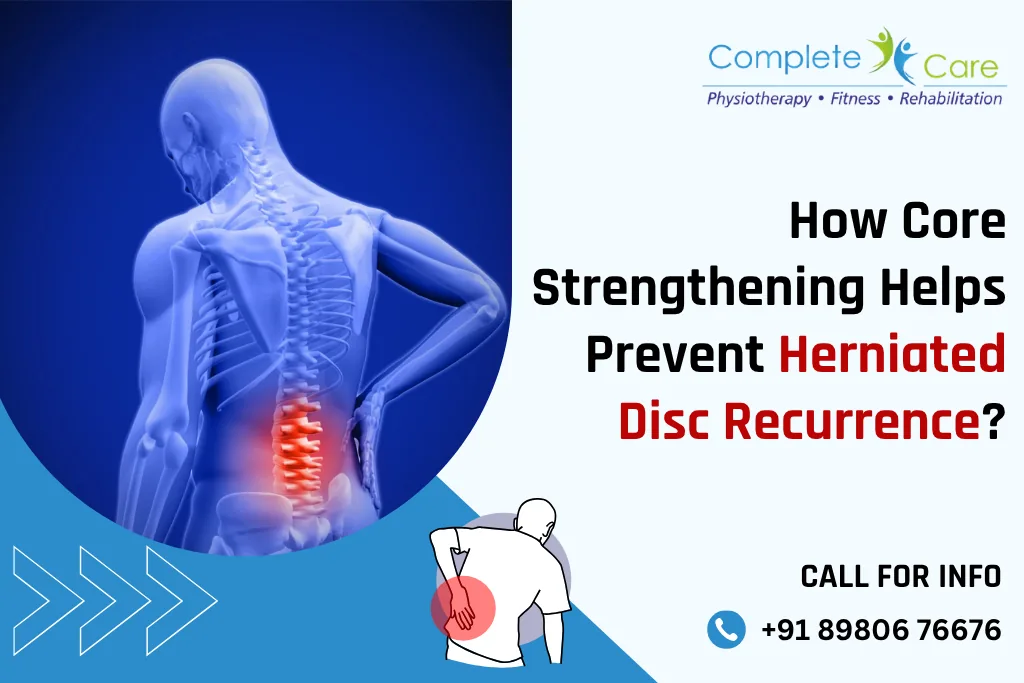
This is why core strengthening for herniated disc recovery is often a key part of physiotherapy programs. Strong core muscles support the spine, improve posture, and reduce the pressure that can lead to future injuries. In this guide, we’ll explore how core strength contributes to herniated disc recurrence prevention and why it is an important part of non surgical recovery.
Understanding a Herniated Disc
A herniated disc occurs when the soft inner material of a spinal disc pushes through its outer layer. This can irritate nearby nerves and cause symptoms such as pain, numbness, or weakness.
Common Symptoms of a Herniated Disc:
- Lower back pain
- Pain radiating to the legs
- Tingling or numbness
- Muscle weakness
- Difficulty sitting or standing for long periods
- Reduced mobility
Many patients recover successfully with herniated disc treatment without surgery, but preventing future episodes requires a proactive approach.
Why Herniated Discs Often Return
Many people experience significant improvement after treatment but later develop similar symptoms again. This usually happens because the underlying causes were never fully addressed.
Common Reasons for Recurrence
- Weak core muscles
- Poor posture
- Sedentary lifestyle
- Improper lifting techniques
- Returning to intense activities too quickly
- Lack of regular exercise
This is where herniated disc recurrence prevention becomes crucial.
What Is the Core and Why Does It Matter?
The core is much more than just the abdominal muscles. It includes a group of muscles that work together to stabilize the spine and pelvis.
Core Muscles Include:
- Abdominal muscles
- Lower back muscles
- Pelvic floor muscles
- Hip stabilizers
- Deep spinal support muscles
When these muscles are strong, they act as a natural support system for the spine.
How Core Strengthening Supports the Spine
A strong core helps distribute movement and force more efficiently throughout the body.
Benefits of Core Strengthening:
- Reduces pressure on spinal discs
- Improves posture and alignment
- Enhances balance and stability
- Supports everyday movements
- Reduces the risk of re-injury
These benefits make core strengthening for herniated disc recovery an essential part of long term spinal health.
1\. Reduces Excess Stress on the Spine
When core muscles are weak, the spine must absorb more force during daily activities such as sitting, lifting, bending, and walking.
What Happens with a Weak Core?
- Increased disc pressure
- Poor spinal support
- Higher risk of strain
- Greater chance of recurring pain
Strengthening the core reduces this unnecessary load and supports herniated disc recurrence prevention.
2\. Improves Posture Throughout the Day
Poor posture is one of the most overlooked causes of spinal problems.
Common Posture Mistakes
- Slouching while sitting
- Leaning forward at a desk
- Rounded shoulders
- Improper standing alignment
Core exercises help maintain proper posture naturally, reducing spinal stress over time.
3\. Enhances Movement Efficiency
A stable core allows the body to move more efficiently during everyday tasks.
Activities That Benefit from Core Stability
- Walking
- Climbing stairs
- Lifting objects
- Exercising
- Driving
When movement patterns improve, the risk of future disc injuries decreases significantly.
4\. Supports Recovery Without Surgery
One of the primary goals of rehabilitation is to achieve lasting results through herniated disc treatment without surgery.
Why Physiotherapists Focus on Core Training
- Builds spinal resilience
- Improves flexibility
- Restores functional movement
- Reduces future injury risk
Core strengthening is often considered one of the most valuable components of non surgical rehabilitation programs.
Best Core Exercises for Herniated Disc Recovery
Not all exercises are appropriate during recovery. The focus should be on controlled, low-impact movements.
Common Physiotherapist-Recommended Exercises
(1) Pelvic Tilts
Help activate deep core muscles while minimizing spinal stress.
(2) Bird-Dog Exercise
Improves balance, coordination, and spinal stability.
(3) Modified Planks
Strengthen abdominal muscles without excessive strain.
(4) Bridges
Support glute and lower back strength.
(5) Dead Bug Exercise
Improves core control and spinal alignment.
A physiotherapist can recommend exercises based on your specific condition and recovery stage.
Importance of Professional Physiotherapy
While home exercises can help, professional guidance ensures exercises are performed safely and effectively.
Benefits of Physiotherapy:
- Personalized exercise programs
- Proper movement assessment
- Posture correction
- Pain management strategies
- long term prevention planning
For expert rehabilitation support, explore Physiotherapy Treatment for Herniated Disc in Ahmedabad to receive a customized recovery plan focused on both healing and prevention.
Lifestyle Habits That Support Core Strength
Exercise alone is not enough. Daily habits also influence spinal health.
Healthy Habits for Disc Protection
- Maintain a healthy body weight
- Avoid prolonged sitting
- Lift objects correctly
- Stay physically active
- Take movement breaks during work
- Sleep on a supportive mattress
These habits complement core strengthening for herniated disc recovery and improve long term outcomes.
How Chiropractic Care Can Support Recovery
Many patients combine physiotherapy with chiropractic care to improve posture and spinal alignment.
Potential Benefits:
- Better joint mobility
- Reduced muscle tension
- Improved body mechanics
- Enhanced posture awareness
Warning Signs You Should Not Ignore
Even after recovery, it’s important to monitor symptoms carefully.
Consult a Specialist If You Experience
- Returning back pain
- Persistent leg numbness
- Increasing weakness
- Difficulty walking
- Recurrent sciatica symptoms
Early intervention often prevents small problems from becoming major setbacks.
Conclusion
Recovery from a herniated disc does not end when the pain disappears. long term success depends on strengthening the body to prevent future injuries. That’s why core strengthening for herniated disc recovery plays such a vital role in spinal health.
By improving stability, posture, and movement patterns, core exercises support effective herniated disc recurrence prevention and help many individuals maintain an active lifestyle. Combined with professional herniated disc treatment without surgery, a strong core can be one of the best investments you make in protecting your spine for years to come.
This article is published for patient education and does not replace an in-person clinical assessment. For personalized diagnosis and treatment planning, contact our physiotherapists on +91 8980 676 676 or visit any of our six centres across Gujarat.