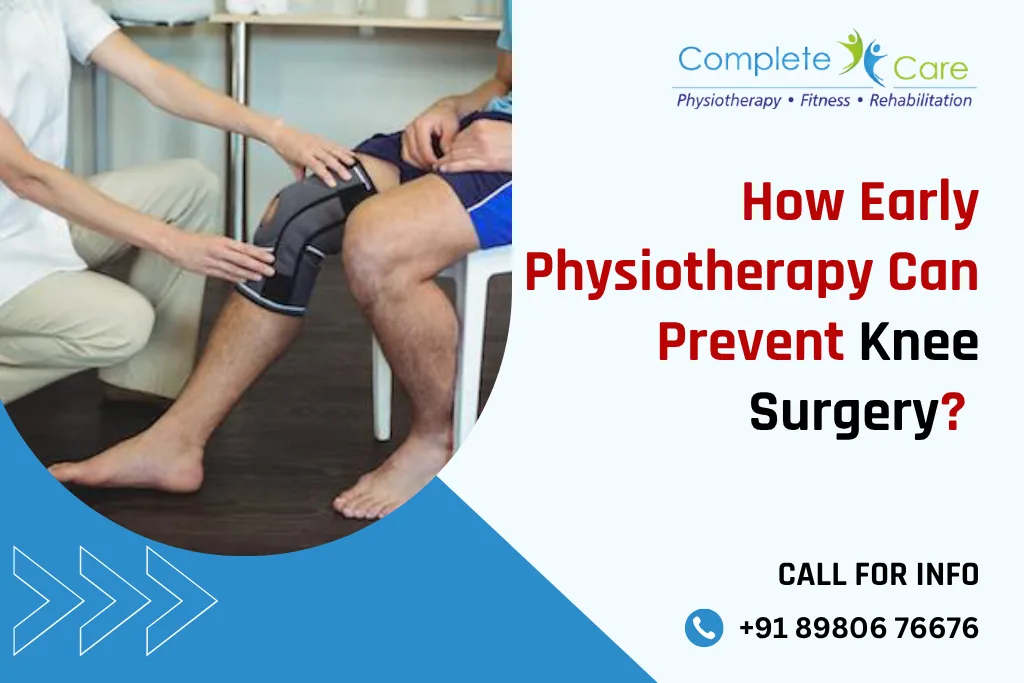
How Early Physiotherapy can Prevent Knee Surgery
- complete\_care
- May 4, 2026
- Knee Pain
Knee pain is one of the most common musculoskeletal problems affecting people of all ages. Whether it’s due to long working hours, sports injuries, or age related wear and tear, many individuals delay treatment until the pain becomes severe. At that stage, surgery is often suggested-but it’s not always necessary.
The good news is that early physiotherapy for knee pain can significantly reduce symptoms, improve mobility, and in many cases, help you avoid surgery altogether. This guide explains how timely intervention works and why it matters.
Why Knee Pain Should Never Be Ignored
Knee pain rarely starts as a major issue. It usually begins with mild discomfort and gradually worsens due to neglect.
Common Causes of Knee Pain
- Muscle weakness around the knee joint
- Poor posture and movement habits
- Ligament strain or minor injury
- Sedentary lifestyle
- Weight-related stress on joints
- Overuse during physical activities
Ignoring these early signs can lead to chronic conditions that may eventually require surgical intervention.
What Is Early Physiotherapy and Why It Matters
Early physiotherapy for knee pain focuses on diagnosing and treating the root cause before the condition worsens. Instead of waiting for severe damage, physiotherapy works at the initial stage to restore strength, flexibility, and joint stability.
Key Benefits of Early Physiotherapy
- Reduces inflammation and pain naturally
- Improves joint mobility and flexibility
- Strengthens surrounding muscles
- Prevents further damage to cartilage and ligaments
- Speeds up recovery without invasive procedures
Starting treatment early gives your body the best chance to heal without needing surgery.
How Physiotherapy Helps Avoid Knee Surgery
Many patients are surprised to learn that they can avoid knee surgery with physiotherapy. The reason is simple-most knee problems are functional, not structural, especially in the early stages.
1\. Corrects Movement Patterns
Improper walking, sitting, or exercise habits put extra pressure on the knee joint. Physiotherapy helps correct these patterns, reducing strain.
2\. Strengthens Supporting Muscles
Weak muscles force the knee joint to handle more load than it should. Strength training redistributes this load effectively.
3\. Improves Joint Alignment
Misalignment can lead to uneven wear and tear. Therapy techniques help restore proper alignment and balance.
4\. Reduces Pain Without Medication Overuse
Instead of relying on painkillers, physiotherapy uses natural methods like exercises, manual therapy, and modalities to relieve discomfort.
Non Surgical Knee Pain Treatment Options
If you’re looking for non surgical knee pain treatment, physiotherapy offers a range of safe and effective solutions.
Common Physiotherapy Techniques
- Manual therapy for joint mobility
- Strengthening exercises for muscles
- Stretching routines to improve flexibility
- Electrotherapy for pain relief
- Posture and gait correction
These treatments are customized based on your condition, ensuring faster and safer recovery.
Signs You Should Start Physiotherapy Early
Recognizing symptoms early can make a huge difference in your recovery journey.
Watch Out for These Warning Signs
- Pain while climbing stairs
- Stiffness after sitting for long periods
- Swelling around the knee
- Clicking or popping sounds
- Difficulty bending or straightening the leg
Real-Life Scenario: Early vs Late Treatment
Early Treatment
- Faster recovery
- Minimal pain
- No surgery required
- Lower medical costs
- Better long term joint health
Delayed Treatment
- Chronic pain
- Reduced mobility
- Higher chance of surgery
- Longer recovery time
- Increased expenses
This clearly shows why acting early is crucial.
Role of Lifestyle in Preventing Knee Surgery
Physiotherapy alone is powerful, but combining it with healthy habits enhances results.
Daily Habits That Support Knee Health
- Maintain a healthy body weight
- Avoid prolonged sitting
- Use proper footwear
- Warm up before exercise
- Stay physically active
These habits reduce stress on the knees and complement non surgical knee pain treatment.
When Surgery Might Still Be Needed
While physiotherapy is highly effective, some advanced conditions may still require surgery.
Situations Where Surgery May Be Considered
- Severe ligament tears
- Advanced osteoarthritis
- Major structural damage
- Failure of conservative treatment
However, even in these cases, physiotherapy plays a critical role in pre- and post surgical recovery.
How Chiropractic Care Supports Knee Recovery
Along with physiotherapy, chiropractic care can enhance healing by improving body alignment and reducing joint stress.
Benefits of Chiropractic Treatment
- Improves joint function
- Reduces pressure on knees
- Enhances mobility
- Supports overall musculoskeletal health
Why Choose Professional Physiotherapy Care
Self-treatment and online exercises may help temporarily, but professional guidance ensures proper diagnosis and effective treatment.
Advantages of Expert Care
- Personalized treatment plans
- Supervised exercises
- Faster and safer recovery
- long term prevention strategies
Choosing the right clinic for Physiotherapy Treatment for Knee Pain in Ahmedabad ensures you get the best outcomes.
Conclusion
Knee pain doesn’t have to lead to surgery. With the right approach, many people successfully avoid knee surgery with physiotherapy and return to their normal lives pain-free.
The key is early action. Starting early physiotherapy for knee pain helps address the root cause, prevents further damage, and supports long term joint health.
If you’re experiencing knee discomfort, don’t wait for it to worsen. Explore effective non surgical knee pain treatment options and take the first step toward recovery today.
This article is published for patient education and does not replace an in-person clinical assessment. For personalized diagnosis and treatment planning, contact our physiotherapists on +91 8980 676 676 or visit any of our six centres across Gujarat.