Slip Disc Recovery Time with Physiotherapy
- complete\_care
- May 25, 2026
- Chiropractic Treatment
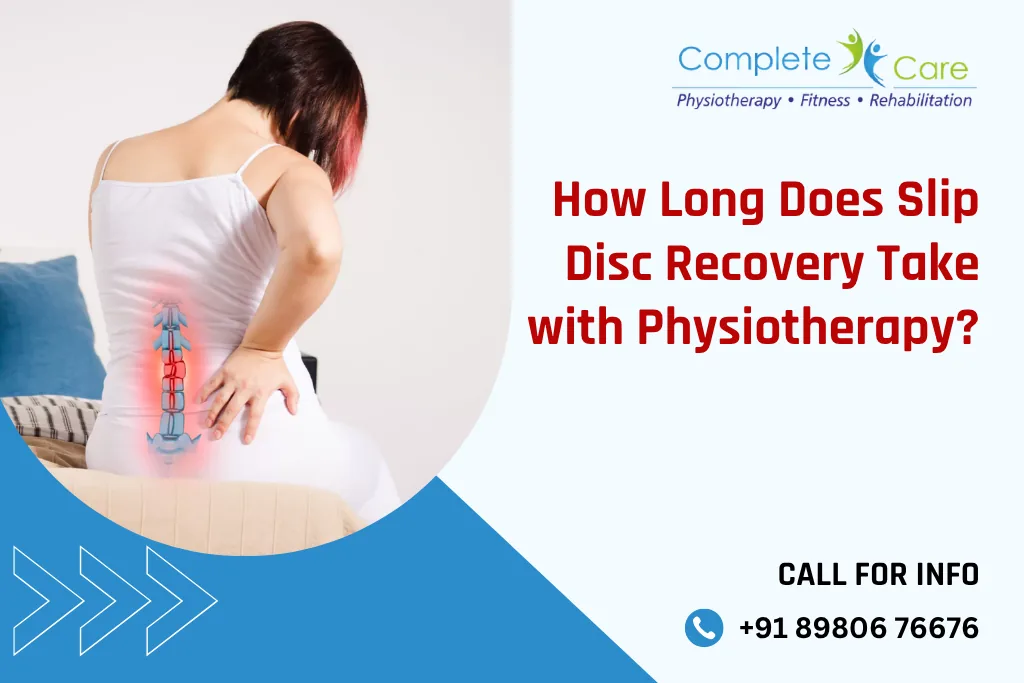
A slip disc, also called a herniated disc, is one of the most common causes of lower back pain and nerve-related discomfort. It can affect daily activities like sitting, walking, sleeping, and even working comfortably. One of the first questions patients ask is: “How long will recovery take?”
The answer depends on several factors, including the severity of the condition, lifestyle habits, and how early treatment begins. With proper physiotherapy for slip disc, many people recover successfully without surgery and return to their normal routine.
In this guide, we’ll understand the average slip disc recovery time, factors affecting healing, and how physiotherapy supports faster recovery.
What Is a Slip Disc?
The spine contains soft discs between vertebrae that act as shock absorbers. A slip disc occurs when the inner portion of the disc pushes outward and irritates nearby nerves.
Common Symptoms of Slip Disc
1. Lower back pain
2. Pain radiating to legs
3. Numbness or tingling
4. Muscle weakness
5. Difficulty sitting or bending
6. Sciatica pain
Symptoms may range from mild discomfort to severe mobility issues.
How Long Does Slip Disc Recovery Usually Take?
The average slip disc recovery time varies from person to person.
Mild Cases
1. Recovery may take 4 to 6 weeks
2. Pain improves with rest and physiotherapy
3. Daily activities gradually return to normal
Moderate Cases
1. Recovery may require 2 to 3 months
2. Consistent physiotherapy becomes important
3. Muscle strengthening is needed
Severe Cases
1. Recovery can take several months
2. Nerve symptoms may last longer
3. Intensive rehabilitation may be required
Early diagnosis and treatment usually lead to faster improvement.
Factors That Affect Slip Disc Recovery Time
Several factors influence how quickly a person heals.
1\. Severity of Disc Damage
A small disc bulge heals faster compared to a severe herniation pressing heavily on nerves.
Severe Symptoms Include
- Sharp leg pain
- Difficulty walking
- Loss of strength
- Persistent numbness
The more severe the compression, the longer the recovery process.
2\. How Early Treatment Begins
Starting physiotherapy for slip disc early can prevent the condition from worsening.
Benefits of Early Care
- Reduces inflammation
- Improves mobility faster
- Prevents muscle weakness
- Reduces pressure on spinal nerves
Ignoring symptoms for months may increase recovery time significantly.
3\. Lifestyle and Daily Habits
Poor posture and unhealthy habits slow healing.
Habits That Delay Recovery
- Long sitting hours
- Heavy lifting
- Lack of exercise
- Poor sleeping posture
- Excess body weight
Changing these habits plays a major role in faster recovery.
How Physiotherapy Helps Slip Disc Recovery
One of the most effective methods for non surgical recovery is physiotherapy for slip disc.
Instead of only masking pain, physiotherapy focuses on improving spinal function and reducing pressure on nerves.
Benefits of Physiotherapy
- Relieves pain naturally
- Improves flexibility
- Strengthens core muscles
- Restores posture and balance
- Prevents recurrence
With proper therapy, many patients avoid long term complications.
Common Physiotherapy Treatments for Slip Disc
Treatment plans are personalized based on symptoms and severity.
1\. Stretching Exercises
Gentle stretches reduce nerve pressure and improve mobility.
2\. Core Strengthening
Stronger abdominal and back muscles support the spine better.
3\. Posture Correction
Improves spinal alignment and reduces strain during sitting and walking.
4\. Manual Therapy
Hands-on therapy improves joint movement and muscle relaxation.
5\. Heat or Electrotherapy
Used for pain relief and reducing muscle tightness.
These techniques make herniated disc treatment without surgery highly effective for many patients.
Can Physiotherapy Help Avoid Surgery?
In many cases, yes. Most people recover with conservative treatment when therapy begins early.
Physiotherapy May Help You Avoid Surgery By
- Reducing nerve compression
- Improving spinal stability
- Preventing worsening disc damage
- Restoring movement naturally
This is why herniated disc treatment without surgery is often recommended before considering surgical procedures.
Recovery Timeline: What to Expect
Understanding the healing process helps patients stay realistic and motivated.
Week 1 to 2
Common Improvements
- Reduced inflammation
- Better movement
- Less severe pain
Focus remains on pain management and gentle mobility.
Week 3 to 6
Recovery Progress
- Increased flexibility
- Improved sitting tolerance
- Better walking ability
Strengthening exercises usually begin during this stage.
After 2 to 3 Months
long term Goals
- Stronger spine support
- Improved posture
- Return to normal activities
- Reduced risk of recurrence
Consistency with exercises remains essential.
Daily Tips to Speed Up Slip Disc Recovery
Healthy daily habits support faster healing.
Helpful Recovery Tips
- Avoid prolonged sitting
- Use proper lifting techniques
- Sleep on supportive mattress
- Stay physically active
- Maintain correct posture
- Follow exercise plan consistently
These habits can improve overall slip disc recovery time significantly.
Role of Chiropractic Care in Spine Recovery
Some patients combine physiotherapy with chiropractic care for better posture and spinal alignment.
Benefits of Chiropractic Care
- Improves joint mobility
- Reduces muscle tension
- Supports posture correction
- Enhances spinal balance
When Should You Seek Immediate Medical Attention?
While most cases improve with therapy, certain symptoms require urgent care.
Warning Signs Include
- Loss of bladder or bowel control
- Severe leg weakness
- Increasing numbness
- Difficulty standing or walking
These symptoms should never be ignored.
Conclusion
The overall slip disc recovery time depends on the severity of the condition, lifestyle habits, and how early treatment begins. With timely [physiotherapy for slip disc](/slipped-herniated-disc-physiotherapy-treatment-in-ahmedabad/), many patients recover successfully without surgery and regain normal movement.
Choosing the right rehabilitation plan and following healthy daily habits are key to long term spinal health. If you are struggling with back pain or nerve-related symptoms, early herniated disc treatment without surgery can help you recover safely and comfortably.
This article is published for patient education and does not replace an in-person clinical assessment. For personalized diagnosis and treatment planning, contact our physiotherapists on +91 8980 676 676 or visit any of our six centres across Gujarat.